Spring cleaning sounds simple until you actually start.
You walk into one room to clean a shelf, notice clutter on the counter, remember the closet needs attention too, and suddenly the entire house feels overwhelming. That’s why so many people search for help with spring cleaning planning instead of just spring cleaning itself.
The hardest part is usually not the cleaning. It’s figuring out where to begin without feeling like every room needs attention at the same time.
A good spring cleaning plan helps break that mental overload into something more manageable. Instead of trying to deep clean the entire house in one exhausting weekend, the goal becomes creating a clear order of priorities that makes the work feel lighter and more realistic.
By the end of this guide, you’ll understand what areas usually matter most during seasonal cleaning, how to prioritize tasks, and how to create a home refresh plan that actually feels doable.

What Should You Clean First During Spring Cleaning?
One of the most common mistakes people make during spring cleaning is starting with small visible tasks before dealing with the areas that affect the whole home.
In most cases, it helps to begin with the spaces that create the biggest sense of mental clutter or daily stress.
That often means focusing on:
- Kitchens
- Bathrooms
- Entryways
- Main living areas
- Floors and surfaces used every day
These areas impact how the home feels overall. Even small improvements there tend to create noticeable relief quickly.
Starting with high-impact spaces also helps build momentum. When the home begins feeling calmer early in the process, it becomes easier to keep going without burning out halfway through.
How to Prioritize Spring Cleaning Without Feeling Overwhelmed
A lot of people approach seasonal cleaning like one giant project. That usually backfires.
The more effective approach is to separate cleaning into layers instead of trying to tackle everything equally.
Start With What Affects Daily Life Most
Ask yourself:
- What room feels stressful every day?
- What area constantly looks messy no matter how much I tidy?
- What tasks keep getting postponed?
That’s usually where your cleaning priorities should start.
Focus on “Hidden Stress” Areas
Some spaces create mental clutter even when they’re not obvious at first glance.
Things like:
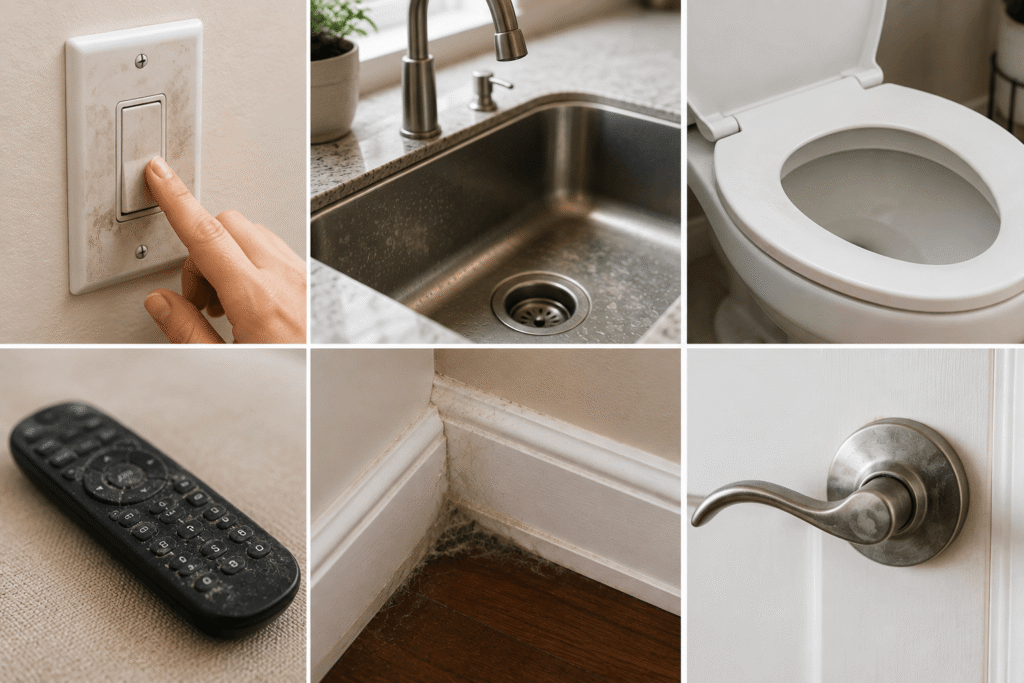
- Dusty baseboards
- Sticky cabinet fronts
- Fingerprints on switches
- Bathroom buildup
- Corners that never fully get cleaned
These details slowly add to the feeling that a home is never truly done.
That’s one reason many people shift toward more structured cleaning systems over time, especially when they realize how many small tasks quietly get missed during regular upkeep and more detailed deep cleaning routines start making more sense.
What Rooms Matter Most in a Spring Home Refresh?
Not every room needs the same level of attention during a home refresh.
Some spaces naturally collect more buildup through winter months and everyday living.
Kitchen
The kitchen usually becomes the biggest reset point during spring cleaning.
People often focus on:
- Cabinet fronts
- Appliance exteriors
- Pantry organization
- Floors and corners
- High-touch surfaces
Even when kitchens look “mostly clean,” they tend to collect layers of buildup over time.
Bathrooms
Bathrooms are another high-priority area because buildup happens gradually and consistently.
This is usually where people focus on:
- Tile and grout
- Fixtures
- Mirrors
- Cabinets
- Baseboards and corners
Bedrooms and Living Areas
These spaces are less about grime and more about restoring calm.
A home refresh often includes:
- Dust removal
- Decluttering
- Fresh linens
- Under-furniture cleaning
- Reorganizing surfaces
In many homes, the emotional side of spring cleaning matters just as much as the physical cleaning itself. People are often trying to create a space that feels lighter, calmer, and easier to live in.
How Long Does Spring Cleaning Usually Take?
This depends on the condition of the home, how detailed the cleaning is, and whether you’re doing maintenance cleaning or a full reset.
For some people, spring cleaning happens gradually over several weekends. Others prefer handling one room at a time throughout the month.
Trying to do everything in one day usually creates frustration more than progress.
That’s why planning matters more than speed.
When you step back and look at how cleaning routines work long term, most homes function better when there’s a balance between periodic resets and ongoing upkeep rather than constant all-or-nothing cleaning cycles. A more complete breakdown of that rhythm can help put spring cleaning into perspective as part of a broader professional house cleaning approach.
How Professionals Approach Seasonal Cleaning
Professionals usually don’t start cleaning randomly. They work in systems.
That means:
- Prioritizing high-impact spaces first
- Working top to bottom
- Handling buildup before maintenance tasks
- Focusing on consistency instead of perfection
They also understand that cleaning fatigue is real.
One reason spring cleaning feels overwhelming is because people try to notice and solve everything at once. A more sustainable approach is focusing on progress room by room instead of treating the entire house like one giant unfinished task.
Over time, people naturally develop better cleaning priorities once they understand which tasks actually change how the home feels day to day and which areas quietly affect the overall sense of cleanliness.
Why Spring Cleaning Feels So Mentally Important
Spring cleaning is rarely just about dust.
For many people, it’s tied to the feeling of starting fresh after months of buildup, busier schedules, and winter routines.
A clean space often creates mental clarity because unfinished tasks stop competing for attention in the background.
That’s why spring cleaning planning matters more than people realize. A realistic plan helps prevent the process from becoming another overwhelming project.
Instead of trying to create perfection, the goal becomes creating relief.
Frequently Asked Questions
What should I clean first during spring cleaning?
Most people start with kitchens, bathrooms, and high-traffic living spaces because those areas affect daily comfort the most.
How do I make a spring cleaning schedule?
Break tasks into smaller sections by room or category instead of trying to clean the entire house at once.
How long does spring cleaning take for most homes?
It varies, but many people spread spring cleaning across several days or weekends to avoid burnout.
What is usually included in seasonal cleaning?
Seasonal cleaning often includes dusting, decluttering, detailed surface cleaning, bathrooms, kitchens, floors, and overlooked areas like baseboards or switches.
Is spring cleaning different from regular cleaning?
Yes. Regular cleaning maintains the home, while spring cleaning usually focuses on deeper seasonal buildup and reset tasks.
Why does spring cleaning feel overwhelming?
It often feels overwhelming when everything is treated as equally urgent. Planning and prioritizing tasks makes the process more manageable.
Final Thoughts
Good spring cleaning planning is less about doing everything perfectly and more about knowing what matters most first.
When priorities are clear, cleaning feels more manageable, less mentally exhausting, and far more effective.
The goal isn’t to create a perfect home overnight. It’s to create a space that feels lighter, calmer, and easier to live in one step at a time.
If you’d like to explore this topic further, there’s more depth in how seasonal cleaning fits into long-term home routines and everyday upkeep.