A lot of people start researching cleaning services with one simple question: Why do prices vary so much?
One company gives a quick estimate over the phone. Another asks detailed questions about the home. Some charge hourly. Others price by square footage or service level. It can feel difficult to understand what actually changes the cost—and what doesn’t.
That’s why people often search for home cleaning cost factors instead of just looking for a flat price.
The reality is that home cleaning costs are usually shaped by a combination of things: the condition of the home, the level of detail involved, the size of the space, and the amount of time required to clean thoroughly.
By understanding the main pricing variables, it becomes much easier to know what to expect and why different homes may require different levels of work.
What Affects the Cost of Home Cleaning the Most?
One of the biggest factors in cleaning pricing is simply how much work the home requires.
That doesn’t always mean whether a house looks “messy.” A home can appear fairly tidy while still needing a lot of detailed cleaning underneath the surface.
Some of the biggest pricing variables usually include:
- Size of the home
- Number of bathrooms and kitchens
- Level of buildup
- Frequency of cleaning
- Type of cleaning requested
- Detail work involved
A smaller home with significant buildup may take longer than a larger home that’s already maintained regularly.
That’s why cleaning estimates are often based more on workload than appearance alone.
Does Home Size Change Cleaning Pricing?
Yes—but not always in the way people assume.
Larger homes usually require more time because there are simply more surfaces, floors, fixtures, and rooms to clean. But square footage alone does not tell the whole story.
For example:
- A lightly used guest room may take very little time
- A smaller kitchen with heavy buildup may take much longer
- Homes with pets or children often need more detailed attention in certain areas
Some cleaning providers use square footage as part of their pricing structure because it creates a more consistent way to estimate workload rather than guessing based on time alone. In many cases, the level of detail matters just as much as the size itself, especially in more thorough deep cleaning situations where overlooked areas become part of the process.
Why Do Deep Cleans Usually Cost More?
This is one of the most common questions people ask when comparing cleaning estimates.
Deep cleaning usually costs more because it involves more time, more detail, and more physical labor than maintenance cleaning.
Routine cleaning focuses on upkeep. Deep cleaning focuses on buildup and areas that are often skipped during everyday cleaning routines.
That may include:
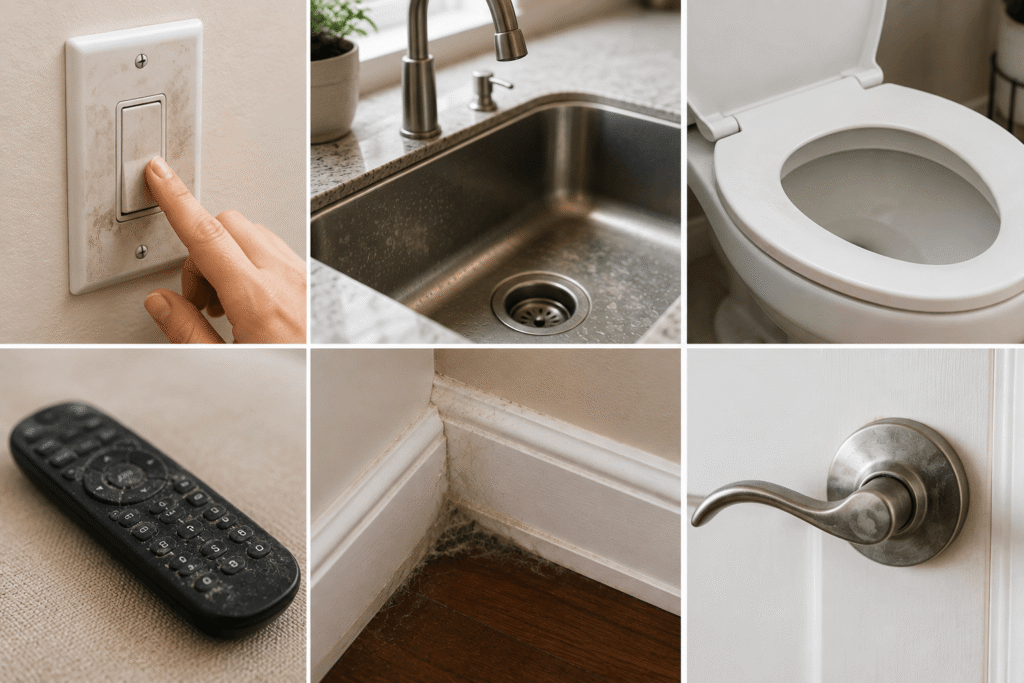
- Baseboards
- Light switches
- Door frames
- Detailed bathroom cleaning
- Kitchen buildup removal
- Corners, edges, and hard-to-reach spaces
These smaller details take time, especially when they haven’t been cleaned thoroughly in a while.
A lot of people researching pricing are really trying to understand the difference between maintenance cleaning and more detailed reset-style cleaning. Once you understand how cleaning levels are typically approached over time, the pricing structure tends to make a lot more sense within a broader professional house cleaning process.
How Often Does Cleaning Frequency Affect Cost?
Cleaning frequency can influence pricing because homes that are cleaned consistently usually require less intensive work each visit.
For example:
- Weekly upkeep often prevents heavy buildup
- Monthly cleaning may require more resetting each time
- Occasional cleaning appointments usually involve more detailed work
This doesn’t mean one option is “better.” It simply changes the amount of labor involved.
A home that has gone several months without detailed cleaning may naturally take longer than a home that’s maintained regularly.
That’s why many pricing structures are based on the current condition of the home instead of using one flat rate for every situation.
What Else Can Increase Home Cleaning Costs?
Beyond size and cleaning level, there are smaller variables that can also affect pricing.
Add-On Services
Some tasks require additional time or specialized attention, including:
- Inside appliances
- Interior cabinets
- Laundry
- Window interiors
- Detailed organization work
These are often treated separately because not every home needs them every visit.
Accessibility and Layout
Certain home layouts naturally require more time.
Examples include:
- Multiple stair levels
- Tight spaces
- Heavy furniture movement
- High-use family areas
The goal of pricing is usually to reflect the actual workload involved—not just the number of rooms in the house.
How Professionals Think About Cleaning Estimates
Professionals typically look at cleaning estimates through the lens of time, detail, and consistency.
They’re not just asking:
“How big is the home?”
They’re also asking:
- How much detail is involved?
- How long will the cleaning realistically take?
- Is this maintenance cleaning or a full reset?
- What level of thoroughness is expected?
That’s why accurate estimates often require more information than people initially expect.
Cleaning isn’t always predictable from square footage alone because every home is lived in differently.
Over time, many homeowners start noticing that the real value in cleaning is less about speed and more about consistency, detail, and how the home actually feels afterward. That’s also why conversations around pricing often overlap with broader questions about cleaning expectations and long-term upkeep.
Why Cleaning Prices Can Feel Confusing
Part of the confusion around pricing comes from the fact that not all cleaning services approach cleaning the same way.
Some focus on faster maintenance-style cleaning. Others prioritize more detailed work. Some include detail areas automatically, while others treat them as upgrades.
That’s why two homes with similar square footage can still receive very different estimates.
The pricing is usually reflecting:
- Time required
- Cleaning depth
- Service scope
- Level of detail involved
Once you understand the main home cleaning cost factors, the differences between pricing structures become much easier to interpret.
Frequently Asked Questions
What factors affect home cleaning prices the most?
The biggest factors are usually home size, cleaning level, buildup, frequency of service, and the amount of detailed work involved.
Does a bigger house always cost more to clean?
Usually, yes, but the condition of the home and the level of detail can affect pricing just as much as square footage.
Why is deep cleaning more expensive than regular cleaning?
Deep cleaning takes more time because it includes detailed tasks and areas that are often skipped during routine maintenance cleaning.
Do cleaning companies charge by the hour or by square footage?
Some use hourly pricing, while others use square footage or service scope to estimate workload more consistently.
Can the condition of a home affect cleaning costs?
Yes. Homes with heavier buildup or long gaps between cleanings often require more time and detailed work.
Are add-on cleaning services usually priced separately?
In many cases, yes. Tasks like inside appliances, laundry, or cabinet interiors are often treated as separate add-on services.
Final Thoughts
Understanding home cleaning cost factors helps remove a lot of the uncertainty around cleaning estimates.
Pricing is usually influenced by the amount of work involved, the level of detail needed, and how the home has been maintained over time—not just the size of the space itself.
Once you understand how cleaning scope, frequency, and workload fit together, pricing starts to feel much more predictable and easier to evaluate.
If you’d like to explore this topic further, there’s more depth in how cleaning expectations, maintenance routines, and service levels work together over time.