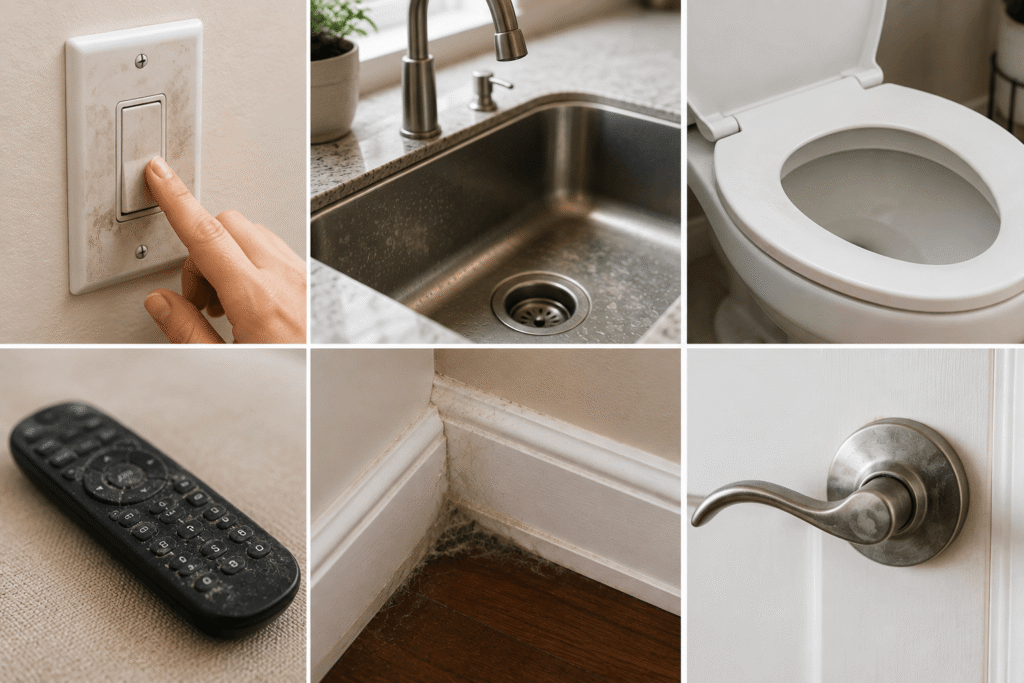
You get your home professionally cleaned, and for about two glorious days, everything feels perfect. Then life happens. By day four, the kitchen counter is cluttered, the bathroom mirror has toothpaste splatters, and you’re wondering how it got messy so fast.
The gap between professional cleanings doesn’t have to feel like a slow descent into chaos. With the right daily habits and a realistic maintenance plan, you can keep your home feeling fresh without spending hours scrubbing every night.
This guide walks through the specific routines, room-by-room strategies, and mindset shifts that make home maintenance sustainable—not exhausting.
In This Guide
Which Type of Home Maintainer Are You?
The Reactive Cleaner
You clean when things look dirty or when guests are coming over. Your home cycles between spotless and chaotic. You want routines that feel manageable, not rigid.
What helps most: Daily resets tied to existing habits (like cleaning the kitchen right after dinner) so maintenance becomes automatic.
The Busy Juggler
You have kids, pets, or a demanding schedule. Cleaning feels like it never ends. You need strategies that contain chaos rather than achieve perfection.
What helps most: Zone-based maintenance and teaching everyone in the household to handle their own messes immediately.
The Maintenance Pro
You already keep things pretty tidy between professional cleanings. You’re here to optimize—to find smarter routines or figure out why certain areas still get messy.
What helps most: Identifying your specific trouble zones and adjusting your weekly deep-tasks to prevent buildup in those areas.
Why Homes Get Dirty So Fast After Cleaning
There’s a reason your home feels messy within days of a professional cleaning: high-touch surfaces accumulate grime exponentially, and clutter makes everything look dirtier than it actually is.
When professionals deep-clean, they’re resetting your home to baseline. But within 24 hours, normal life resumes. Kitchen counters collect crumbs and spills. Bathroom mirrors get toothpaste spray. Floors track in dirt from shoes.
The difference between homes that stay clean and homes that spiral quickly comes down to whether those surfaces get addressed daily or ignored until they’re visibly gross.
Key insight: Clutter makes dirt more visible. A single dirty dish on a clear counter looks manageable. Five dishes, mail, and a coffee mug make the whole kitchen feel chaotic—even if the actual dirt level is the same.
The Three Factors That Make Homes Look Dirty Fast
1. High-traffic surfaces aren’t maintained. Kitchens and bathrooms show grime within 48 hours because they’re used constantly. A quick daily wipe prevents the buildup that makes them feel dirty.
2. Clutter isn’t managed. Stacks of mail, scattered shoes, and piles of laundry create visual noise. Even if your floors are clean, clutter makes the space feel messy.
3. Dirt is tracked in from outside. Shoes bring in an estimated 80% of household dirt. A simple shoes-off policy at the door cuts floor grime dramatically.
Daily Habits That Actually Prevent Mess Buildup
Most advice about maintaining a clean home involves long lists of tasks. In reality, three core daily habits prevent 80% of visible mess: managing dishes immediately, doing a quick evening tidy, and removing shoes at the door.
These aren’t deep-cleaning tasks. They’re quick resets that keep your baseline clean instead of letting small messes compound into overwhelming ones.
The Non-Negotiable Daily Three
1. Handle dishes right after meals.
Don’t let them sit in the sink. Load the dishwasher or hand-wash immediately. A clean kitchen sink makes the entire kitchen feel maintained. Piled dishes create a domino effect—counters get cluttered, cooking feels harder, and the whole space spirals.
2. Do a 5-minute evening tidy.
Before bed, walk through shared spaces and put things back where they belong. Shoes in the closet, mail in its spot, throw blankets folded. This prevents the slow accumulation that makes tidying feel overwhelming. You wake up to a reset space instead of yesterday’s chaos.
3. Remove shoes at the door.
Shoes track in dirt, pollen, and grime. A shoes-off household reduces floor dirt by up to 80%. Keep a basket or mat by the door so the habit feels natural. This single change dramatically extends the life of your professional floor cleaning.
Additional Daily Maintenance Tasks (5 Minutes Total)
Once the core three are habits, layer in these quick tasks:
- Wipe kitchen counters after cooking. Don’t wait until they’re sticky. A damp cloth takes 30 seconds and prevents grime buildup.
- Squeegee the shower after use. Prevents soap scum and water spots from forming. Takes 20 seconds and eliminates most bathroom cleaning.
- Make the bed. A made bed makes the whole bedroom feel put-together, even if nothing else is perfect.
- Spot-sweep high-traffic areas. A quick sweep of the entryway and kitchen prevents dirt from spreading throughout the house.
These tasks aren’t about perfection. They’re about keeping the baseline so that weekly cleaning stays manageable instead of becoming a major event.
What Pushes Maintenance Up vs. What Keeps It Manageable
↑ What Makes It Harder
- Letting dishes pile up overnight
- No designated spots for clutter
- Shoes worn throughout the house
- Ignoring spills until they’re sticky
- Cleaning only when it looks bad
- No daily tidy routine
↓ What Makes It Easier
- Cleaning as you go (dishes, counters)
- Everything has a home
- Shoes-off household policy
- Wiping spills immediately
- 5-minute evening tidy habit
- Keeping cleaning supplies accessible
Room-by-Room Maintenance Strategies
Each room in your home accumulates dirt differently. Effective maintenance matches the task to the room’s usage pattern, not a generic checklist. Here’s how to keep each space functional between deep cleans.
Kitchen: The Highest-Traffic Zone
Kitchens show grime fastest because of food particles, moisture, and constant use. The goal is preventing buildup, not achieving restaurant-level sterility.
Daily:
- Wipe counters and stovetop after cooking
- Load/run dishwasher or hand-wash dishes
- Sweep or spot-mop visible crumbs and spills
- Take out trash if it’s more than half full
Weekly:
- Wipe down appliance fronts (fridge, microwave)
- Clean sink and faucet thoroughly
- Mop floors
- Wipe cabinet handles and light switches
Pro tip: Keep a dish towel or microfiber cloth on the counter. Wiping spills immediately is easier than scrubbing dried food later. The cloth being visible reminds you to use it.
Bathroom: Moisture Management Is Key
Bathrooms accumulate soap scum, toothpaste spray, and water spots. Daily moisture control prevents most of the grime that makes bathrooms feel dirty.
Daily:
- Squeegee shower walls after use (prevents 80% of soap scum)
- Wipe toothpaste splatters from mirror and sink
- Hang towels to dry (prevents mildew smell)
- Quick toilet bowl swish with brush
Weekly:
- Clean toilet thoroughly (bowl, seat, base)
- Wipe down all surfaces (counter, sink, faucet)
- Clean mirror completely
- Mop floor, especially around toilet base
- Replace towels
Living Areas: Clutter Control Over Deep Cleaning
Living rooms, family rooms, and entryways collect clutter more than actual dirt. The primary maintenance task is returning items to their homes, not scrubbing.
Daily:
- 5-minute tidy before bed (shoes away, surfaces clear)
- Fluff couch cushions
- Put remote controls and devices in their spots
Weekly:
- Vacuum high-traffic areas
- Dust visible surfaces (TV stand, coffee table)
- Wipe light switches and door handles
Bedrooms: The Low-Maintenance Zone
Bedrooms stay cleaner longer because they’re low-traffic. The main maintenance need is managing laundry and keeping surfaces clear.
Daily:
- Make the bed
- Put clothes away (not on the floor or chair)
Weekly:
- Change bed linens
- Vacuum floors
- Dust nightstands and dressers